Close transcription
Because I could not stop for Death -
He kindly stopped for me -
The Carriage held but just Ourselves -
And Immortality.
We slowly drove - He knew no haste
And I had put away
My labor and my leisure too,
For His Civility -
We passed the School, where Children strove
At Recess - in the Ring -
We passed the Fields of Gazing Grain -
We passed the Setting Sun -
Or rather - He passed Us -
The Dews drew quivering and Chill -
For only Gossamer, my Gown -
My Tippet - only Tulle -
We paused before a House that seemed
A Swelling of the Ground -
The Roof was scarcely visible -
The Cornice - in the Ground -
Since then - 'tis Centuries - and yet
Feels shorter than the Day
I first surmised the Horses' Heads
Were toward Eternity -
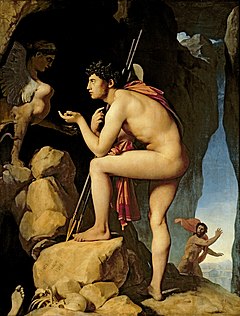
Oedipus explains the riddle of the Sphinx,
by Jean Auguste Dominique Ingres, c. 1805
Oedipus (US /ˈɛdɨpəs/ or UK /ˈiːdɨpəs/; Ancient Greek: Οἰδίπους Oidípous meaning "swollen foot") was a mythical Greek king of Thebes, the son and killer of Laius, son and consort of Jocasta, and father and sibling of Polynices, Eteocles, Antigone, and Ismene. A tragic hero in Greek mythology, Oedipus accidentally fulfilled the prophecy, despite his efforts not to, that he would end up killing his father and marrying his mother, thereby bringing disaster to his city and family. When the truth was discovered, his wife-mother hanged herself, and Oedipus gouged out his own eyes. They had four children together. The story of Oedipus is the subject of Sophocles's tragedy Oedipus the King, which was followed by Oedipus at Colonus and then Antigone. Together, these plays make up Sophocles's three Theban plays. Oedipus represents two enduring themes of Greek myth and drama: the flawed nature of humanity and an individual's role in the course of destiny in a harsh universe.
Swell 腫起來
Swelling ankle 與 Oedipus 的關係
Oedipus/Oidipous was named after the swelling from the injuries to his feet and ankles ("swollen foot"). The word "oedema" (British English) or "edema" (American English) is from this same Greek word for swelling: οἴδημα, or oedēma.
Tombstone

“So we beat on, boats against the current, borne back ceaselessly into the past.”
― F. Scott Fitzgerald, The Great Gatsbycemetery

rip.
Raise in piece
Make a covenant rainbow never destroy the world by letting go of the water
Ark of covenant
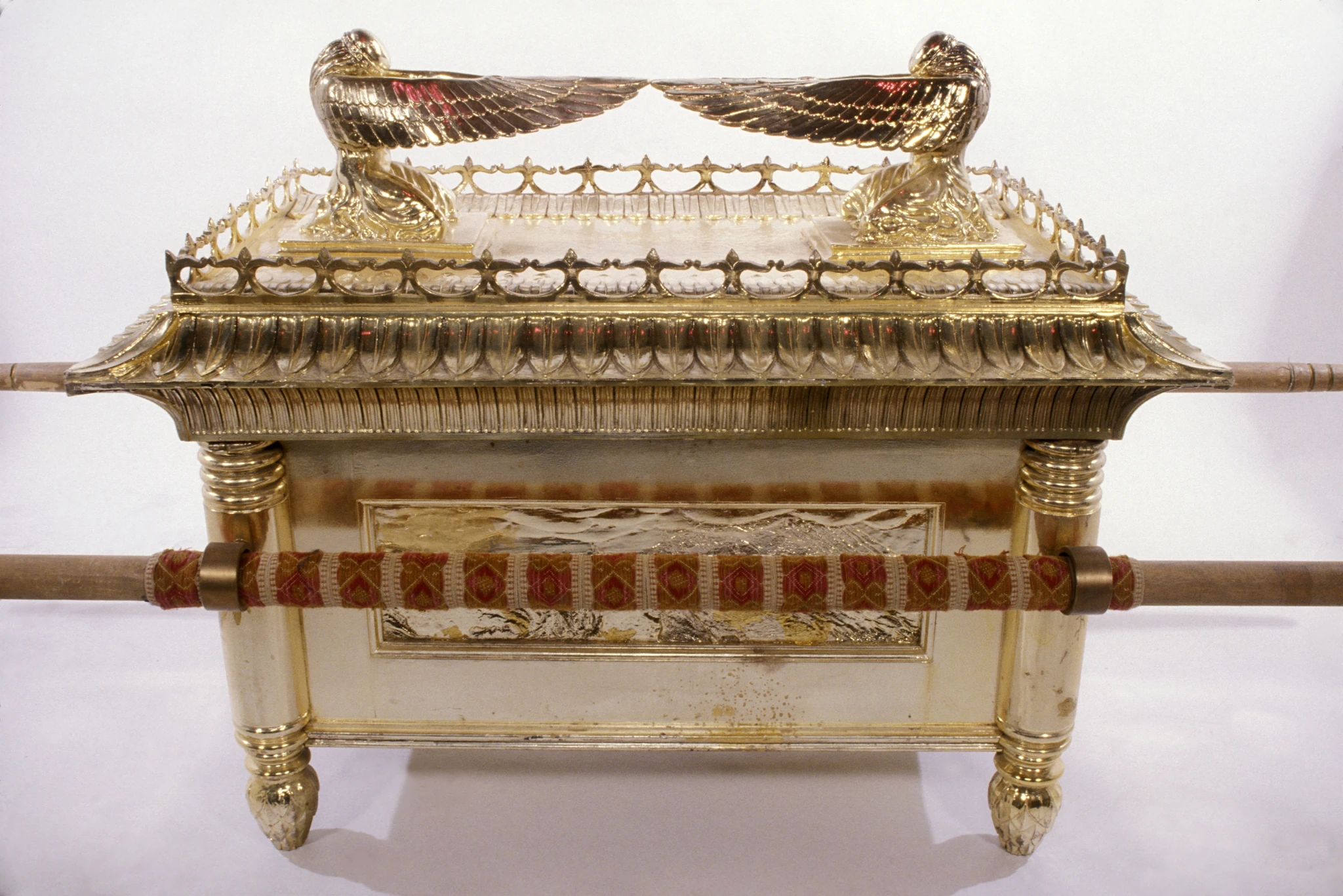
Noah 's ark


沒有留言:
張貼留言