2014年12月25日 星期四

Week 16 英文兒童文學

Mark Twain
Samuel Langhorne Clemens (November 30, 1835 – April 21, 1910), better known by his pen name Mark Twain, was an American author and humorist. He wrote The Adventures of Tom Sawyer (1876) and its sequel, Adventures of Huckleberry Finn(1885), the latter often called "the Great American Novel".


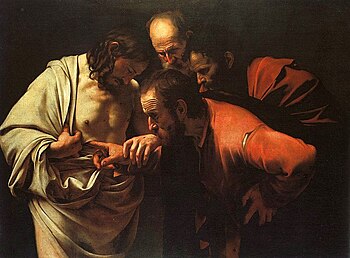
doubting Thomas 
A doubting Thomas is a skeptic who refuses to believe without direct personal experience—a reference to the Apostle Thomas, who refused to believe that the resurrected Jesus had appeared to the ten other apostles, until he could see and feel the wounds received by Jesus on the cross.
In art, the episode (formally called the Incredulity of Thomas) has been frequently depicted since at least the 5th century, with its depiction reflecting a range of theological interpretations

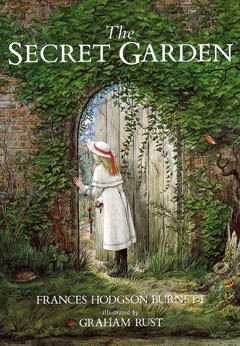
The Secret Garden is the book's central symbol, inspired, in part, by Burnett's interest in Mary Baker Eddy's Christian Science theories. The secret garden at Misselthwaite Manor is the site of both the near-destruction and the subsequent regeneration of a family. Using the garden motif, Burnett explores the healing power inherent in living things.

2014年12月18日 星期四

Week 15 英文兒童文學

The Wonderful Wizard of Oz

Wizard title page.jpgThe Wonderful Wizard of Oz is a children's novel written by L. Frank Baum and illustrated by W. W. Denslow. Originally published by the George M. Hill Company in Chicago on May 17, 1900, it has since been reprinted numerous times, most often under the name The Wizard of Oz, which is the name of both the popular 1902 Broadway musical and the well-known 1939 film adaptation.
The story chronicles the adventures of a young girl named Dorothy Gale in the Land of Oz, after being swept away from her Kansas farm home in a cyclone.[nb 1] The novel is one of the best-known stories in American popular culture and has been widely translated. Its initial success, and the success of the 1902 Broadway musical which Baum adapted from his original story, led to Baum's writing thirteen additional Oz books. The original book has been in the public domain in the US since 1956.
Baum dedicated the book "to my good friend & comrade, My Wife", Maud Gage Baum. In January 1901, George M. Hill Company, the publisher, completed printing the first edition, which totaled 10,000 copies.""
Shirley Temple Colored Headshot.jpgShirley Temple Black (née Temple; April 23, 1928 – February 10, 2014) was an American film and television actress, singer, dancer and public servant, most famous as Hollywood's number one box-office star from 1935 through 1938. As an adult, she entered politics and became a diplomat, serving as United States Ambassador to Ghana and later to Czechoslovakia, and as Chief of Protocol of the United States.


Judy Garland publicity photo.pngJudy Garland (born Frances Ethel Gumm; June 10, 1922 – June 22, 1969) was an American actress, singer and vaudevillian. She was renowned for her vocals[1] and attained international stardom which continued throughout a career that spanned more than 40 years as an actress in musical and dramatic roles, as a recording artistand on the concert stage.[2] Respected for her versatility, she received a Juvenile Academy Award and won a Golden Globe Award as well as Grammy Awards and aSpecial Tony Award.
She was nominated for the Academy Award for Best Actress for her role in the remake of A Star Is Born and for Best Supporting Actress for her performance in the 1961 film Judgment at Nuremberg. She remains the youngest recipient (at 39 years of age) of the Cecil B. DeMille Award for lifetime achievement in the motion picture industry.


Bildungsroman

                                                                
In literary criticism, a Bildungsroman (German pronunciation: [ˈbɪldʊŋs.ʁoˌmaːn]German"novel of formation/education/culture"),[a] novel of formationnovel of education,[2] or coming-of-age story (though it may also be known as a subset of the coming-of-age story) is a literary genre that focuses on the psychological and moral growth of the protagonist from youth to adulthood (coming of age),[3] and in which, therefore, character change is extremely important.[4][5]


O Come All Ye Faithful

O Come All Ye Faithful
Joyful and triumphant,
O come ye, O come ye to Bethlehem.
Come and behold Him,
Born the King of Angels;
O come, let us adore Him,
Christ the Lord.

O Sing, choirs of angels,
Sing in exultation,
Sing all that hear in heaven God's holy word.
Give to our Father glory in the Highest;
O come, let us adore Him,
Christ the Lord.

All Hail! Lord, we greet Thee,
Born this happy morning,
O Jesus! for evermore be Thy name adored.
Word of the Father, now in flesh appearing;
O come, let us adore Him,
Christ the Lord.

O Come All Ye Faithful – Christmas Carol Music and lyrics

L. Frank Baum


Baum 1911.jpg
Lyman Frank Baum (May 15, 1856 – May 6, 1919), better known by his pen name L. Frank Baum, was an American author chiefly known for his children's books, particularly The Wonderful Wizard of Oz. He wrote thirteen novel sequels, nine other fantasy novels, and a host of other works (55 novels in total, plus four "lost" novels, 83 short stories, over 200 poems, an unknown number of scripts,[1] and many miscellaneous writings), and made numerous attempts to bring his works to the stage and screen. His works anticipated such century-later commonplaces as televisionaugmented reality, laptop computers (The Master Key), wireless telephones (Tik-Tok of Oz), women in high risk, action-heavy occupations (Mary Louise in the Country), and the ubiquity of advertising on clothing (Aunt Jane's Nieces at Work).


2011 Oscars: Live Performance By PS22 Chorus - Somewhere Over The Rainbow


2014年12月11日 星期四

Week 14 英文兒童文學


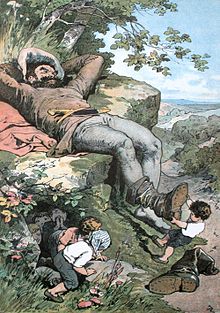
fairy tale (pronounced /ˈfeəriˌteɪl/) is a type of short story that typically features European folkloric fantasy characters, such as dwarveselvesfairiesgiantsgnomes,goblinsmermaidstrolls, or witches, and usually magic or enchantments. Fairy tales may be distinguished from other folk narratives such as legends (which generally involve belief in the veracity of the events described)[1] and explicitly moral tales, including beast fables.

In less technical contexts, the term is also used to describe something blessed with unusual happiness, as in "fairy tale ending" (a happy ending)[2] or "fairy tale romance" (though not all fairy tales end happily). Colloquially, a "fairy tale" or "fairy story" can also mean any farfetch

Happy ending- fairy tale ending


The 
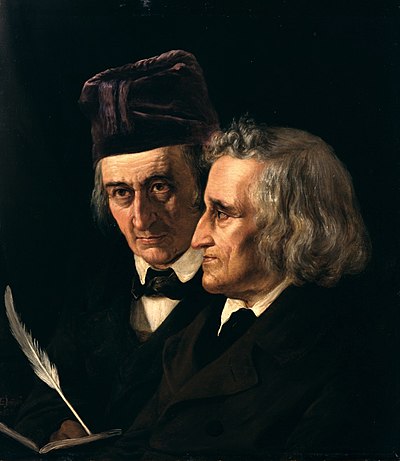
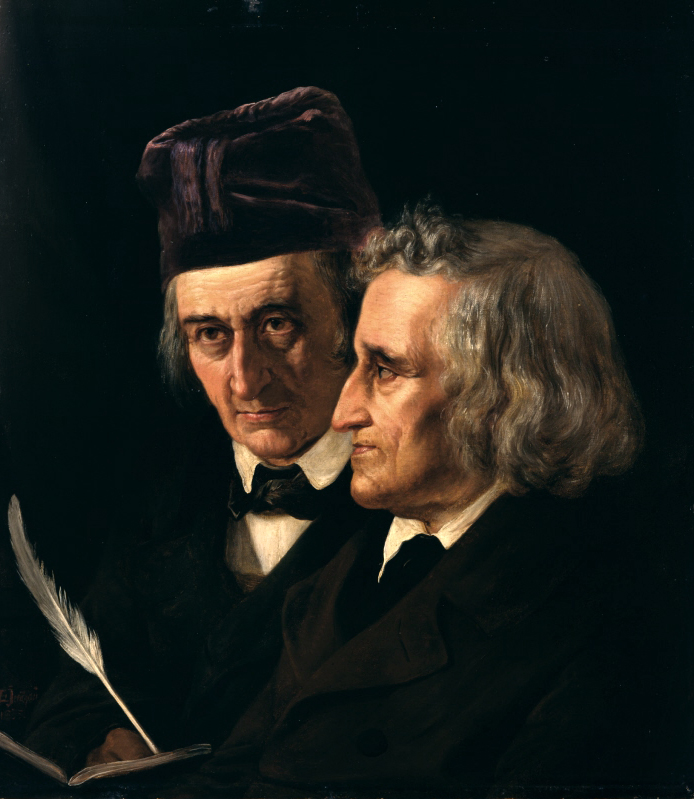
Brothers Grimm (or Die Brüder Grimm), Jacob (1785–1863) and Wilhelm Grimm (1786–1859), were German academics, linguists, cultural researchers, lexicographers and authors who together specialized in collecting and publishing folklore during the 19th century. They were among the best-known storytellers of folk tales, and popularized stories such as "Cinderella" ("Aschenputtel"), "The Frog Prince" ("Der Froschkönig"), "Hansel and Gretel" ("Hänsel und Gretel"), "Rapunzel", "Rumpelstiltskin" ("Rumpelstilzchen"), and "Snow White" ("Schneewittchen"). Their first collection of folk tales, Children's and Household Tales (Kinder- und Hausmärchen), was published in 1812.


Hans Christian Anderson- The Little Mermaid, The Snow Queen , The Ugly Duckling
                                                     
                                                   The Princess and the pea ,mirror stage → self-esteem
                                                                                                                               self- confidence
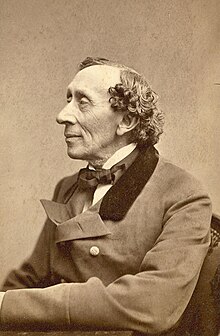
HCA by Thora Hallager 1869.jpg

foul language
The catcher in the Rye

" If a body catch a body "

the red shoe - Anderson
        ↓
conflict → 小女孩窮

indifferent-  careless
infamous- notorious

2014年12月4日 星期四

Week 13 英文兒童文學

She is a toast.

Andy Williams - It's the most wonderful Time of the year


Advent2007candlelight.JPG

Advent
  將臨期

is a season observed in many Western Christian churches as a time of expectant waiting and preparation for the celebration of the Nativity of Jesus at Christmas. The term is an anglicized version of the Latin word adventus, meaning "coming"


Second Coming book of revelation
In Christianity, the Second Coming, sometimes called the second advent of Christ or the parousia, is the anticipated return of Jesus to Earth. The belief is based on prophecies found in the canonical gospels and is part of most Christian eschatologies. The coming is predicted in biblical messianic prophecies. Views about the nature of Jesus' Second Coming vary among Christian denominations and among individual Christians.


William Butler Yeats (1865-1939)

       THE SECOND COMING
    Turning and turning in the widening gyre
    The falcon cannot hear the falconer;
    Things fall apart; the centre cannot hold;
    Mere anarchy is loosed upon the world,
    The blood-dimmed tide is loosed, and everywhere
    The ceremony of innocence is drowned;
    The best lack all conviction, while the worst
    Are full of passionate intensity.

    Surely some revelation is at hand;
    Surely the Second Coming is at hand.
    The Second Coming! Hardly are those words out
    When a vast image out of Spiritus Mundi
    Troubles my sight: a waste of desert sand;
    A shape with lion body and the head of a man,
    A gaze blank and pitiless as the sun,
    Is moving its slow thighs, while all about it
    Wind shadows of the indignant desert birds.

    The darkness drops again but now I know
    That twenty centuries of stony sleep
    Were vexed to nightmare by a rocking cradle,
    And what rough beast, its hour come round at last,
    Slouches towards Bethlehem to be born?

The three magi 東方三賢

What child is this?


What child is this, who, laid to rest,
On Mary's lap is sleeping?
Whom angels greet with anthems sweet,
While shepherds watch are keeping?
This, this is Christ the King,
Whom shepherds guard and angels sing:
Haste, haste to bring Him laud,
The babe, the son of Mary.
Why lies He in such mean estate,
Where ox and donkeys are feeding?
Good Christians, fear, for sinners here
The silent Word is pleading.
Nails, spears shall pierce him through,
the cross he bore for me, for you.
Hail, hail the Word made flesh,
the Babe, the Son of Mary.
So bring him incense, gold, and myrrh,
Come, peasant, king, to own him.
The King of kings salvation brings,
Let loving hearts enthrone him.
Raise, raise a song on high,
The virgin sings her lullaby
Joy, joy for Christ is born,
The babe, the Son of Mary.
This, this is Christ the King,
Whom shepherds guard and angels sing:
Haste, haste to bring Him laud,
The babe, the son of Mary.


Success is counted sweetest by Emily Dickinson → the purple phallic symbol


Brothers Grimm


Hansel and Gretel


Hooding ceremony


Rapunzel

2014年11月27日 星期四

Week 12 英文兒童文學

dis-
Examples Word Origin
1.
a Latin prefix meaning “apart,” “asunder,” “away,” “utterly,” or having a privative, negative, or reversing force (see de-, un-2.); used freely, especially with these latter senses, as an English formative:
disability; disaffirm; disbar; disbelief; discontent; dishearten; dislike; disown.

disable
[dis-ey-buh l]  Spell Syllables
Synonyms Examples Word Origin
verb (used with object), disabled, disabling.
1.
to make unable or unfit; weaken or destroy the capability of; incapacitate: The detective successfully disabled the bomb.
He was disabled by the accident.
2.
to make legally incapable; disqualify.

dissolve
[dih-zolv]  Spell Syllables
Synonyms Examples Word Origin
verb (used with object), dissolved, dissolving.
1.
to make a solution of, as by mixing with a liquid; pass into solution:
to dissolve salt in water.
2.
to melt; liquefy:
to dissolve sugar into syrup.
3.
to undo (a tie or bond); break up (a connection, union, etc.).
4.
to break up (an assembly or organization); dismiss; disperse.
5.
Government. to order the termination of (a parliament or other legislative body).
6.
to bring to an end; terminate; destroy:
to dissolve one's hopes.
7.
to separate into parts or elements; disintegrate.

discard
[v. dih-skahrd; n. dis-kahrd]  Spell Syllables
Examples Word Origin
verb (used with object)
1.
to cast aside or dispose of; get rid of:
to discard an old hat.
2.
Cards.
to throw out (a card or cards) from one's hand.
to play (a card, not a trump, of a different suit from that of the card led).
verb (used without object)
3.
Cards. to discard a card or cards.
noun
4.
the act of discarding.
5.
a person or thing that is cast out or rejected.
6.
Cards. a card or cards discarded.

---------------------------------------------------------------------------------------------
I feel shameful.
pro- in favor of, many, much
Aesop is reported as a prolific writer , for he wrote many works at his time.

Jonathan Swift by Charles Jervas detail.jpg
The V. Rev. Dr Jonathan Swift
Jonathan Swift (30 November 1667 – 19 October 1745) was an Anglo-Irish[1] satirist, essayist, political pamphleteer (first for the Whigs, then for the Tories), poet and cleric who became Dean of St Patrick's Cathedral, Dublin.[2]
He is remembered for works such as Gulliver's TravelsA Modest ProposalA Journal to StellaDrapier's LettersThe Battle of the BooksAn Argument Against Abolishing Christianity, and A Tale of a Tub. Swift is regarded by the Encyclopædia Britannica as the foremost prose satirist in the English language,[1] and is less well known for his poetry. Swift originally published all of his works under pseudonyms – such as Lemuel GulliverIsaac BickerstaffMB Drapier – or anonymously. He is also known for being a master of two styles of satire: the Horatian and Juvenalian styles.

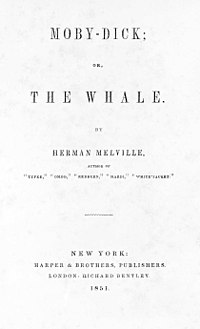
Moby-Dick FE title page.jpg

Moby-Dick; or, The Whale
Moby-Dick; or, The Whale (1851) is a novel by Herman Melville, in which Ishmael narrates the monomaniacal quest of Ahab, captain of the whaler Pequod, for revenge on the albino sperm whale Moby Dick, which on a previous voyage destroyed Ahab's ship and severed his leg at the knee. Although the novel was a commercial failure and out of print at the time of the author's death in 1891, its reputation grew immensely during the twentieth century. D. H. Lawrence called it "one of the strangest and most wonderful books in the world," and "the greatest book of the sea ever written."[1] Moby-Dick is considered a Great American Novel and an outstanding work of theRomantic period in America and the American Renaissance. "Call me Ishmael" is one of world literature's most famous opening sentences.

2014年11月20日 星期四

Week 11 英文兒童文學


To Kill a Mockingbird is a novel by Harper Lee published in 1960. It was immediately successful, winning the Pulitzer Prize, and has become a classic of modern American literature. The plot and characters are loosely based on the author's observations of her family and neighbors, as well as on an event that occurred near her hometown in 1936, when she was 10 years old.

To_Kill_a_MockingbirdThe novel is renowned for its warmth and humor, despite dealing with the serious issues of rape and racial inequality. The narrator's father, Atticus Finch, has served as a moral hero for many readers and as a model of integrity for lawyers. One critic explains the novel's impact by writing, "In the twentieth century, To Kill a Mockingbird is probably the most widely read book dealing with race in America, and its protagonist, Atticus Finch, the most enduring fictional image of racial heroism."

As a Southern Gothic novel and a Bildungsroman, the primary themes of To Kill a Mockingbird involve racial injustice and the destruction of innocence. Scholars have noted that Lee also addresses issues of class, courage, compassion, and gender roles in the American Deep South. The book is widely taught in schools in the United States with lessons that emphasize tolerance and decry prejudice. Despite its themes, To Kill a Mockingbird has been subject to campaigns for removal from public classrooms, often challenged for its use of racial epithets.


Bildungsroman

In literary criticism, a Bildungsroman novel of formation, novel of education, or coming-of-age story (though it may also be known as a subset of the coming-of-age story) is a literary genre that focuses on thepsychological and moral growth of the protagonist from youth to adulthood (coming of age), and in which, therefore, character change is extremely important.

2014年11月13日 星期四

Week 10 英文兒童文學

di-
prefix meaning two, although diverse could be speaking of more than two things.


diversity
dʌɪˈvəːsɪti,dɪ-/
noun
  the state of being diverse.
"there was considerable diversity in the style of the reports"
 a range of different things.
plural noun: diversities
"newspapers were obliged to allow a diversity of views to be printed"
synonyms:
varietymiscellanyassortmentmixturemixmelangerangearray,medleymultiplicity; More


para-1
1.
a prefix appearing in loanwords from Greek, most often attached toverbs and verbal derivatives, with the meanings “at or to one side of,beside, side by side” ( parabola; paragraph; parallel; paralysis),“beyond, past, by” ( paradox; paragogue); by extension from thesesenses, this prefix came to designate objects or activities auxiliary toor derivative of that denoted by the base word ( parody;paronomasia), and hence abnormal or defective ( paranoia), a sensenow common in modern scientific coinages ( parageusia; paralexia).As an English prefix, para- 1may have any of these senses; it isalso productive in the naming of occupational roles consideredancillary or subsidiary to roles requiring more training, or of a higherstatus, on such models as paramedical, and paraprofessional:paralegal; paralibrarian; parapolice.

paragraph

[par-uh-graf, -grahf]
Examples
Word Origin

noun
1.a distinct portion of written or printed matter dealing with a particularidea, usually beginning with an indentation on a new line.

2.a paragraph mark.

3.a note, item, or brief article, as in a newspaper.
verb (used with object)

4.to divide into paragraphs.

5.to write or publish paragraphs about, as in a newspaper.

6.to express in a paragraph.

------------------------------------------------------------------------------------------------------------
          Edmund Spenser
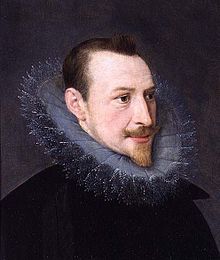
Edmund Spenser oil painting.JPG

Edmund Spenser (/ˈspɛnsə/; 1552/1553 – 13 January 1599) was an English poet best known for The Faerie Queene, an epic poem and fantastical allegory celebrating the Tudor dynasty and Elizabeth I. He is recognised as one of the premier craftsmen of Modern English verse in its infancy, and is often considered one of the greatest poets in the English language.

Fairy Queen is not a fantasy. It's allegorical work.

------------------------------------------------------------------------------------------------------------

Why Mosquitoes Buzz in People’s Ears

-Mosquito

-Iguana (frighten)                                                  King Lion
    farmer                                                      (call the council) 
-Python (scare)
             (ploting mysteries against me)
-rabbit (startle)
            (runs for her life)
-crow   (alarm)
-monkey (kill)

baby owl / mother owl


conflict

The mother owl makes the sun, the dawn can come.