2015年6月18日 星期四

Week 17 青少年小說

William Golding 1983.jpg
Sir William Gerald Golding CBE (19 September 1911 – 19 June 1993) was an English novelist, playwright, and poet. Best known for his novel Lord of the Flies, he won a Nobel Prize in Literature, and was also awarded the Booker Prize for literature in 1980 for his novel Rites of Passage, the first book in what became his sea trilogy, To the Ends of the Earth.


Golding was knighted by Elizabeth II in 1988.[1][2] He was a fellow of the Royal Society of Literature.[1] In 2008, The Times ranked Golding third on their list of "The 50 greatest British writers since 1945"

LordOfTheFliesBookCover.jpg
Lord of the Flies is a 1954 dystopian novel by Nobel Prize-winning English author William Golding about a group of British boys stuck on an uninhabited island who try to govern themselves with disastrous results. Its stances on the already controversial subjects of human nature and individual welfare versus the common good earned it position 68 on the American Library Association’s list of the 100 most frequently challenged books of 1990–1999.[2] The novel is a reaction to the youth novel The Coral Island by R. M. Ballantyne.

Published in 1954, Lord of the Flies was Golding’s first novel. Although it was not a great success at the time—selling fewer than 3,000 copies in the United States during 1955 before going out of print—it soon went on to become a best-seller. It has been adapted to film twice in English, in 1963 by Peter Brook and 1990 by Harry Hook, and once in Filipino (1976).

In 2005 the novel was chosen by TIME magazine as one of the 100 best English-language novels from 1923 to 2005.[3] It was awarded a place on both lists of Modern Library 100 Best Novels, reaching number 41 on the editor's list, and 25 on the reader's list. In 2003, the novel was listed at number 70 on the BBC's survey The Big Read.
Joseph Conrad.PNG
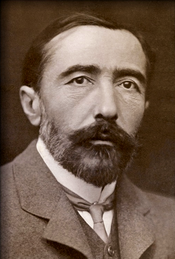
Joseph Conrad (born Józef Teodor Konrad Korzeniowski;3 December 1857 – 3 August 1924) was a Polish author who wrote in English after settling in England.[1] He was granted British nationality in 1886, but always considered himself a Pole.[note 1] Conrad is regarded as one of the greatest novelists in English,[2] and though he did not speak the language fluently until he was in his twenties (and always with a marked accent), he was a master prose stylist who brought a distinctly non-English sensibility into English literature.[note 2] [3] He wrote stories and novels, many with a nautical setting, that depict trials of the human spirit in the midst of an indifferent universe. However, the sea is not an important element i
n a number of major works such as Nostromo, The Secret Agent, and Under Western Eyes.

Lord of the Flies Trailer (2013) [HD]


2015年6月11日 星期四

Week 16 青少年小說

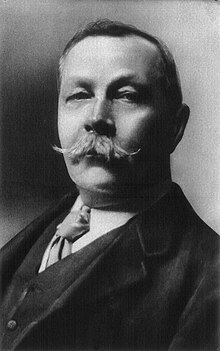
Conan doyle.jpg
Sir Arthur Ignatius Conan Doyle KStJ, DL (22 May 1859 – 7 July 1930) was a Scottish writer and physician, most noted for his fictional stories about the detective Sherlock Holmes, which are generally considered milestones in the field of crime fiction.

He is also known for writing the fictional adventures of a second character he invented, Professor Challenger, and for popularising the mystery of the Mary Celeste.[1] He was a prolific writer whose other works include fantasy and science fiction stories, plays, romances, poetry, non-fiction and historical novels.
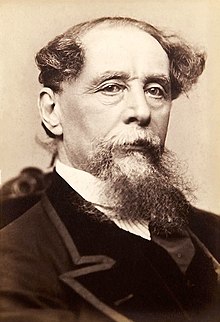
Charles Dickens
Charles John Huffam Dickens (/ˈtʃɑrlz ˈdɪkɪnz/; 7 February 1812 – 9 June 1870) was an English writer and social critic. He created some of the world's best-known fictional characters and is regarded as the greatest novelist of the Victorian era.[1] His works enjoyed unprecedented popularity during his lifetime, and by the twentieth century critics and scholars had recognised him as a literary genius. His novels and short stories enjoy lasting popularity.[2][3]
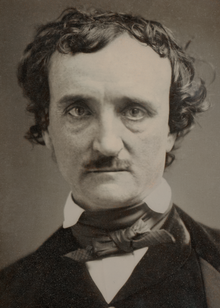
Edgar Allan Poe daguerreotype crop.png
Edgar Allan Poe (/poʊ/; born Edgar Poe; January 19, 1809 – October 7, 1849) was an American author, poet, editor, and literary critic, considered part of the American Romantic Movement. Best known for his tales of mystery and the macabre, Poe was one of the earliest American practitioners of the short story, and is generally considered the inventor of the detective fiction genre. He is further credited with contributing to the emerging genre of science fiction.[1] He was the first well-known American writer to try to earn a living through writing alone, resulting in a financially difficult life and career.[2]
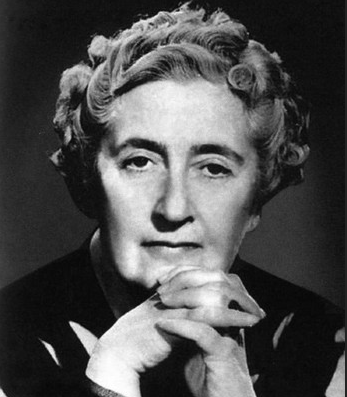
Agatha Christie.png
Dame Agatha Mary Clarissa Christie, Lady Mallowan, DBE (née Miller; 15 September 1890 – 12 January 1976) was an English crime novelist, short story writer, and playwright. She also wrote six romances under the name Mary Westmacott, but she is best known for the 66 detective novels and 14 short story collections she wrote under her own name, most of which revolve around the investigations of such characters as Hercule Poirot, Jane Marple, Parker Pyne, Harley Quin/Mr Satterthwaite, and Tommy and Tuppence Beresford. She wrote the world's longest-running play, The Mousetrap.[1] In 1971, she was made a Dame by Elizabeth II at Buckingham Palace for her contribution to literature.[2]
Detective fiction is a subgenre of crime fiction and mystery fiction in which an investigator or a detective—either professional or amateur—investigates a crime, often murder. The difference between investigator and detective:  Detectives are investigators with a higher rank. For a normal police officer to become a detective, he or she has to go through a lot of tests. Detectives are used to solve criminal matters, while investigators are employed to solve cases of missing person and adultery.


世界三大奇幻小說家

J. R. R. Tolkien

 C. S. Lewis

Ursula K. Le Guin

BBC Sherlock Trailer


2015年6月4日 星期四

Week 15 青少年小說

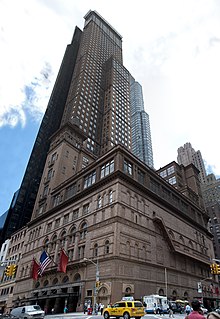
Carnegie Hall, NYC.jpg


Carnegie Hall (/ˈkɑrnɨɡi/,[3] also frequently /kɑrˈneɪɡi/[4] or /kɑrˈnɛɡi/) is a concert venue in Midtown Manhattan in New York City, United States, located at 881 Seventh Avenue, occupying the east stretch of Seventh Avenue between West 56th Street and West 57th Street, two blocks south of Central Park.


Paul's Case (1980) Poster
Lost in a world of fantasy, young working-class Paul dreams of escaping his dreary existence in turn-of-the-century Pittsburgh. As fate would have it Paul gets his chance by stealing some money and subsequently running off to glamorous New York City.

Willa Cather
Willa Cather ca. 1912 wearing necklace from Sarah Orne Jewett.jpg

Willa Sibert Cather (/ˈkæðər/;[1] December 7, 1873[2] – April 24, 1947[3]) was an American author who achieved recognition for her novels of frontier life on the Great Plains, including O Pioneers! (1913), The Song of the Lark (1915), and My Ántonia (1918). In 1923 she was awarded the Pulitzer Prize for One of Ours (1922), a novel set during World War I.


Cather grew up in Virginia and Nebraska, and graduated from the University of Nebraska–Lincoln. She lived and worked in Pittsburgh for ten years.[4] At the age of 33 she moved to New York City, her primary home for the rest of her life, though she also traveled widely and spent considerable time at her summer residence in New Brunswick, Canada.
Faust  is the protagonist of a classic German legend. He is a scholar who is highly successful yet dissatisfied with his life, which leads him to make a pact with the Devil, exchanging his soul for unlimited knowledge and worldly pleasures. The Faust legend has been the basis for many literary, artistic, cinematic, and musical works that have reinterpreted it through the ages. Faust and the adjective Faustian imply a situation in which an ambitious person surrenders moral integrity in order to achieve power and success for a delimited term.


The Faust of early books—as well as the ballads, dramas, movies, and puppet-plays which grew out of them—is irrevocably damned because he prefers human to divine knowledge; "he laid the Holy Scriptures behind the door and under the bench, refused to be called doctor of Theology, but preferred to be styled doctor of Medicine".[1] Plays and comic puppet theatre loosely based on this legend were popular throughout Germany in the 16th century, often reducing Faust and Mephistopheles to figures of vulgar fun. The story was popularised in England by Christopher Marlowe, who gave it a classic treatment in his play, The Tragical History of Doctor Faustus (1604). In Goethe's reworking of the story two hundred years later, Faust becomes a dissatisfied intellectual who yearns for "more than earthly meat and drink" in his life.

2015年5月28日 星期四

Week 14 青少年小說


Vexatlon
noun
  1. the state of being annoyed, frustrated, or worried.
    "Jenna bit her lip in vexation"
    synonyms:annoyance, irritation, irritability, exasperation, anger, rage, fury, temper,bad temper, hot temper, wrath, spleen, chagrin, pique, crossness,indignation, displeasure, discontent, dissatisfaction, disgruntlement, ill humour, peevishness, petulance, testiness, tetchiness, gall, resentment,umbrage; More
    • a cause of annoyance, frustration, or worry.
      plural noun: vexations
      "the vexations of life under canvas"

                 Faith Hill
Faith Hill.jpg

Faith Hill (born Audrey Faith Perry; September 21, 1967) is an American country pop singer and occasional actress. She is one of the most successful country artists of all time, having sold more than 40 million records worldwide.[1] Hill is married to country singer Tim McGraw, with whom she has recorded several successful duets.

http://www.sparknotes.com/short-stories/where-are-you-going-where-have-you-been/

Blowing in the wind ( 反戰民歌 )

How many roads must a man walk down
Before they call him a man
How many seas must a white dove sail
Before she sleeps in the sand
How many times must the cannon balls fly
Before they're forever banned
The answer, my friend, is blowing in the wind
The answer is blowing in the wind

How many years must a mountain exist
Before it is washed to the sea
How many years can some people exist
Before they're allowed to be free
How many times can a man turn his head
And pretend that he just doesn't see
The answer, my friend, is blowing in the wind
The answer is blowing in the wind

How many times must a man look up
Before he can see the sky
How many ears must one man have
Before he can hear people cry
How many deaths will it take till he knows
That too many people have died
The answer, my friend, is blowing in the wind

The answer is blowing in the wind


2015年5月21日 星期四

Week 13 青少年小說

di·a·logue or di·a·log  (dī′ə-lôg′, -lŏg′)
n.
1.
a. A conversation between two or more people.
b. A discussion of positions or beliefs, especially between groups to resolve a disagreement.
2.
a. Conversation between characters in a drama or narrative.
b. The lines or passages in a script that are intended to be spoken.
3. A literary work written in the form of a conversation: the dialogues of Plato.
4. Music A composition or passage for two or more parts, suggestive of conve


cat·a·log or cat·a·logue  (kăt′l-ôg′, -ŏg′)
n.
1.
a. A list or itemized display, as of titles, course offerings, or articles for exhibition or sale, usually including descriptive information or illustrations.
b. A publication, such as a book or pamphlet, containing such a list or display: a catalog of fall fashions; a seed catalog.
2. A list or enumeration: a catalog of complaints.
3. A card catalog.
v. cat·a·loged, cat·a·log·ing, cat·a·logs or cat·a·logued or cat·a·logu·ing or cat·a·logues
v.tr.
1. To make an itemized list of: catalog a record collection.
2.
a. To list or include in a catalog.
b. To classify (a book or publication, for example) according to a categorical system.
v.intr.
1. To make a catalog.
2. To be listed in a catalog: an item that catalogs for 200 dollars.

theatre (ˈθɪətə) or theater
n
1. (Theatre)
a. a building designed for the performance of plays, operas, etc
b. (as modifier): a theatre ticket.
c. (in combination): a theatregoer.
2. a large room or hall, usually with a raised platform and tiered seats for an audience, used for lectures, film shows, etc
3. (Surgery) Also called: operating theatre a room in a hospital or other medical centre equipped for surgical operations
4. (Theatre) plays regarded collectively as a form of art
5. (Theatre) the theatre the world of actors, theatrical companies, etc: the glamour of the theatre.
6. a setting for dramatic or important events
7. (Theatre) writing that is suitable for dramatic presentation: a good piece of theatre.
8. (Film) US and Austral and NZ the usual word for cinema1
9. (Military) a major area of military activity: the theatre of operations.
10. (Architecture) a circular or semicircular open-air building with tiers of seats

the·a·ter or the·a·tre  (thē′ə-tər)
n.
1. A building, room, or outdoor structure for the presentation of plays, films, or other dramatic performances.
2. A room with tiers of seats used for lectures or demonstrations: an operating theater at a medical school.
3.
a. Dramatic literature or its performance; drama: the theater of Shakespeare and Marlowe.
b. The milieu of actors and playwrights.
4.
a. The quality or effectiveness of a theatrical production: good theater; awful theater.
b. Dramatic material or the use of such material: "His summation was a great piece of courtroom theater" (Ron Rosenbaum).
5. The audience assembled for a dramatic performance.
6. A place that is the setting for dramatic events.
7. A large geographic area in which military operations are coordinated: the European theater during World War II.

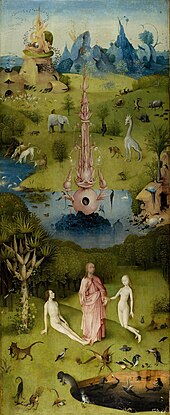
The Garden of Eden 


The Garden of Eden (Hebrew גַּן עֵדֶן, Gan ʿEḏen) is the biblical "garden of God", described most notably in the Book of Genesis chapters 2 and 3, and also in the Book of Ezekiel.[2] The "garden of God", not called Eden, is mentioned in Genesis 14, and the "trees of the garden" are mentioned in Ezekiel 31. The Book of Zechariah and the Book of Psalms also refer to trees and water in relation to the temple without explicitly mentioning Eden.


Senior prom 畢業舞會


 在美國和加拿大,prompromenade的簡寫形式)指為中學生舉辦的正式舞會或聚會,通常在高中學年即將結束時舉行,(所以很多地方都譯作“畢業舞會”)。有初中生參加的叫Junior Prom,高中生的則叫Senior Prom。不過在具體組織的時候,這種舞會通常既有初中生也有高中生。
 Apostles 
According to the Bible's New Testament, the Apostles were the primary disciples of Jesus, the central figure in Christianity. During the life and ministry of Jesus in the first century AD, the apostles were his closest followers and became the primary teachers of the gospel message of Jesus. The word "disciple" is sometimes used interchangeably with "apostle" – for instance the Gospel of John makes no distinction between the two terms. In modern usage, prominent missionaries are identified as apostles – a practice which stems from the Latin equivalent of apostle, missio, the source of the English word "missionary".

Paul the Apostle

Bartolomeo Montagna - Saint Paul - Google Art Project.jpg

Paul the Apostle (Greek: Παῦλος Paulos; c. 5 – c. 67), originally known as Saul of Tarsus (Hebrew: שאול התרסי‎; Greek: Σαῦλος Ταρσεύς Saulos Tarseus),[1][2] was an apostle (though not one of the Twelve Apostles) who taught the gospel of Christ to the first-century world.[7] He is generally considered one of the most important figures of the Apostolic Age.[8][9] In the mid-30s to the mid-50s, he founded several churches in Asia Minor and Europe. Paul used his status as both a Jew and a Roman citizen to advantage in his ministry to both Jewish and Roman audiences.

Joseph Conrad

Joseph Conrad.PNG
Joseph Conrad (born Józef Teodor Konrad Korzeniowski;3 December 1857 – 3 August 1924) was a Polish author who wrote in English after settling in England.[1] He was granted British nationality in 1886, but always considered himself a Pole.[note 1] Conrad is regarded as one of the greatest novelists in English,[2] and though he did not speak the language fluently until he was in his twenties (and always with a marked accent), he was a master prose stylist who brought a distinctly non-English sensibility into English literature.[note 2] [3] He wrote stories and novels, many with a nautical setting, that depict trials of the human spirit in the midst of an indifferent universe. However, the sea is not an important element in major works like Nostromo, The Secret Agent and Under Western Eyes.


Them - It's All Over Now, Baby Blue 

You don't bring me flowers


2015年5月14日 星期四

Week 12 青少年小說

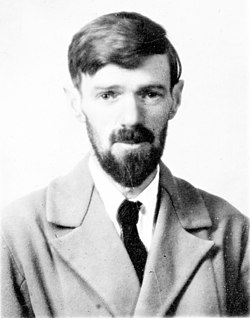
D. H. LawrenceD H Lawrence passport photograph.jpg
David Herbert Richards Lawrence (11 September 1885 – 2 March 1930) was an English novelist, poet, playwright, essayist, literary critic and painter who published as D. H. Lawrence. His collected works, among other things, represent an extended reflection upon the dehumanising effects of modernity and industrialisation. In them, some of the issues Lawrence explores are emotional health, vitality, spontaneity and instinct.

DHL
DHL Express

DHL Express logo.svg


DHL是一家創立自美國,目前為德國郵政集團100%持股的快遞貨運公司,是目前世界上最大的航空快遞貨運公司之一。在台灣部分,其早年進入台灣時曾使用洋基通運的譯名,但為了企業識別的統一,目前已捨棄中文名稱不用,直接稱呼為DHL;在香港,公司的正式註冊名稱為敦豪國際,但日常仍然使用DHL。

Cast Away
is a 2000 American adventure drama film directed and produced by Robert Zemeckis and starring Tom Hanks as a FedEx employee stranded on an uninhabited island after his plane crashes in the South Pacific. The film depicts his attempts to survive on the island using remnants of his plane's cargo. The film was a critical and commercial success, and Hanks was nominated for Best Actor in a Leading Role at the 73rd Academy Awards for his performance.


The Canterbury Tales (Middle English: Tales of Caunterbury[1]) is a collection of over 20 stories written in Middle English by Geoffrey Chaucer at the end of the 14th century, during the time of the Hundred Years' War. The tales (mostly written in verse, although some are in prose) are presented as part of a story-telling contest by a group of pilgrims as they travel together on a journey from Southwark to the shrine of Saint Thomas Becket at Canterbury Cathedral. The prize for this contest is a free meal at the Tabard Inn at Southwark on their return.

Influenza, commonly known as "the flu", is an infectious disease caused by the influenza virus.[1] Symptoms can be mild to severe.[2] The most common symptoms include: a high fever, runny nose, sore throat, muscle pains, headache, coughing, and feeling tired. These symptoms typically begin two days after exposure to the virus and most last less than a week. The cough, however, may last for more than two weeks.[1] In children there may be nausea and vomiting but these are not common in adults. Nausea and vomiting occur more commonly in the unrelated infection gastroenteritis, which is sometimes inaccurately referred to as "stomach flu" or "24-hour flu".[3] Complications of influenza may include viral pneumonia, secondary bacterial pneumonia, sinus infections, and worsening of previous health problems such as asthma or heart failure.


A Whiter Shade Of Pale - Procol Harum


The Beatles - Here Comes The Sun


2015年5月10日 星期日

Week 11 青少年小說

ob

prefix
1.
inverse or inversely: obovate
Word Origin
from Old French, from Latin ob. In compound words of Latin origin, ob- (and oc-, of-, op-) indicates: to, towards ( object); against ( oppose); away from ( obsolete); before ( obstetric); down, over ( obtect); for the sake of ( obsecrate); and is used as an intensifier ( oblong)

opposite

[op-uh-zit, -sit]
  • Synonyms
  • Examples
  • Word Origin
adjective
1.
situated, placed, or lying face to face with something else or each other, or in corresponding positions with relation to an intervening line, space, or thing:
opposite ends of a room.
2.
contrary or radically different in some respect common to both, as in nature, qualities, direction, result, or significance; opposed:
opposite sides in a controversy; opposite directions.
3.
being the other of two related or corresponding things:
friendly with many members of the opposite sex.
4.
Botany.
  1. situated on diametrically opposed sides of an axis, as leaves when there are two on one node.
  2. having one organ vertically above another; superimposed.
5.
adverse or inimical.

opponent

[uh-poh-nuh nt]
  • Synonyms
  • Examples
  • Word Origin
noun
1.
a person who is on an opposing side in a game, contest, controversy, or the like; adversary.
adjective
2.
being opposite, as in position.
3.
opposing; adverse; antagonistic.
4.
Anatomy. bringing parts together or into opposition, as a muscle.

-----------------------------------------------------------------------------
 
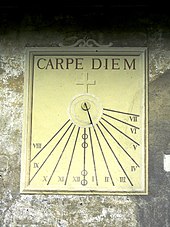
A sundial inscribed "carpe diem"
Carpe diem is a Latin aphorism usually translated to "seize the day", taken from a poem in the Odes (book 1, number 11) in 23 BC by the poet Horace. 
 
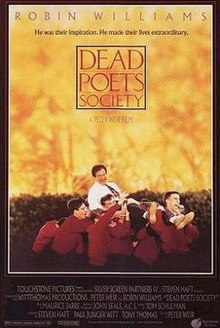
 ------------------------------------------------------------------------------Dead poets society.jpg
Dead Poets Society

Dead Poets Society is a 1989 American drama film written by Tom Schulman, directed by Peter Weir and starring Robin Williams. Set at the conservative and aristocratic Welton Academy in the northeast United States in 1959, it tells the story of an English teacher who inspires his students through his teaching of poetry.
The film received critical acclaim and box office success; it was also BAFTA's best film and best foreign film in France and Italy. Schulman received an Academy Award for Best Original Screenplay for his work.
-------------------------------------------------------------------


Dante, Homer and Virgil in Raphael's Parnassus fresco (1511), in which the Western canon is visualised

The term "Western canon" denotes a body of books and, more broadly, music and art that have been traditionally accepted by Western scholars as the most important and influential in shaping Western culture. As such, it includes the "greatest works of artistic merit". Such a canon is important to the theory of educational perennialism and the development of "high culture". The idea of a Canon has been used to address the question What is Art?; according to this approach, a work is art by comparison to the works in the canon, or conversely, any aesthetic law to be valid should not rule out any of the works included in the canon.The concept has become challenged by advocates of multiculturalism and critics who charge that it has been influenced by race, gender, and other biases.

-------------------------------------------------------------------

Fantasy is a genre of fiction that commonly uses magic and other supernatural phenomena as a primary plot element, theme, or setting. Many works within the genre take place in imaginary worlds where magic and magical creatures are common. Fantasy is generally distinguished from the genres of science fiction and horror by the expectation that it steers clear of scientific and macabre themes, respectively, though there is a great deal of overlap between the three, all of which are subgenres of speculative fiction.

In popular culture, the fantasy genre is predominantly of the medievalist form. In its broadest sense, however, fantasy comprises works by many writers, artists, filmmakers, and musicians, from ancient myths and legends to many recent works embraced by a wide audience today.

Fantasy is studied in a number of disciplines (English, cultural studies, comparative literature, history, medieval studies). Work in this area ranges widely, from the structuralist theory of Tzvetan Todorov, which emphasizes the fantastic as a liminal space, to work on the connections (political, historical, literary) between medievalism and popular culture.[1]

3 Fantasy Books
: Harry Potter, Narnia, and The Lord of the Rings

-------------------------------------------------------------------
A parable is a succinct, didactic story, in prose or verse, which illustrates one or more instructive lessons or principles. It differs from a fable in that fables employ animals, plants, inanimate objects, or forces of nature as characters, whereas parables have human characters[citation needed]. A parable is a type of analogy.[1]

Some scholars of the canonical gospels and the New Testament apply the term "parable" only to the parables of Jesus,[2][3] though that is not a common restriction of the term. Parables such as "The Prodigal Son" are central to Jesus' teaching method in both the canonical narratives and the apocrypha.


Give me a rationale I can do it
 
  -------------------------------------------------------------------
Difference
Allegory: A story in which ideas are symbolized as people. 
Parable: A short story designed to teach a moral or religious lesson. 
Fable: A short story in which animals or objects speaks a story, to teach a moral or religious lesson.