2015年6月18日 星期四

Week 17 青少年小說

William Golding 1983.jpg
Sir William Gerald Golding CBE (19 September 1911 – 19 June 1993) was an English novelist, playwright, and poet. Best known for his novel Lord of the Flies, he won a Nobel Prize in Literature, and was also awarded the Booker Prize for literature in 1980 for his novel Rites of Passage, the first book in what became his sea trilogy, To the Ends of the Earth.


Golding was knighted by Elizabeth II in 1988.[1][2] He was a fellow of the Royal Society of Literature.[1] In 2008, The Times ranked Golding third on their list of "The 50 greatest British writers since 1945"

LordOfTheFliesBookCover.jpg
Lord of the Flies is a 1954 dystopian novel by Nobel Prize-winning English author William Golding about a group of British boys stuck on an uninhabited island who try to govern themselves with disastrous results. Its stances on the already controversial subjects of human nature and individual welfare versus the common good earned it position 68 on the American Library Association’s list of the 100 most frequently challenged books of 1990–1999.[2] The novel is a reaction to the youth novel The Coral Island by R. M. Ballantyne.

Published in 1954, Lord of the Flies was Golding’s first novel. Although it was not a great success at the time—selling fewer than 3,000 copies in the United States during 1955 before going out of print—it soon went on to become a best-seller. It has been adapted to film twice in English, in 1963 by Peter Brook and 1990 by Harry Hook, and once in Filipino (1976).

In 2005 the novel was chosen by TIME magazine as one of the 100 best English-language novels from 1923 to 2005.[3] It was awarded a place on both lists of Modern Library 100 Best Novels, reaching number 41 on the editor's list, and 25 on the reader's list. In 2003, the novel was listed at number 70 on the BBC's survey The Big Read.
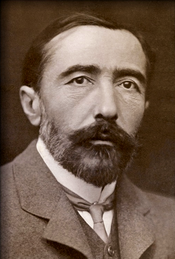
Joseph Conrad.PNG
Joseph Conrad (born Józef Teodor Konrad Korzeniowski;3 December 1857 – 3 August 1924) was a Polish author who wrote in English after settling in England.[1] He was granted British nationality in 1886, but always considered himself a Pole.[note 1] Conrad is regarded as one of the greatest novelists in English,[2] and though he did not speak the language fluently until he was in his twenties (and always with a marked accent), he was a master prose stylist who brought a distinctly non-English sensibility into English literature.[note 2] [3] He wrote stories and novels, many with a nautical setting, that depict trials of the human spirit in the midst of an indifferent universe. However, the sea is not an important element i
n a number of major works such as Nostromo, The Secret Agent, and Under Western Eyes.

Lord of the Flies Trailer (2013) [HD]


2015年6月11日 星期四

Week 16 青少年小說

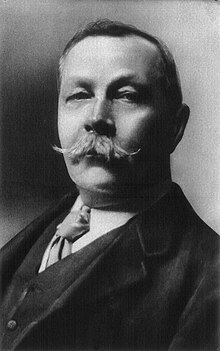
Conan doyle.jpg
Sir Arthur Ignatius Conan Doyle KStJ, DL (22 May 1859 – 7 July 1930) was a Scottish writer and physician, most noted for his fictional stories about the detective Sherlock Holmes, which are generally considered milestones in the field of crime fiction.

He is also known for writing the fictional adventures of a second character he invented, Professor Challenger, and for popularising the mystery of the Mary Celeste.[1] He was a prolific writer whose other works include fantasy and science fiction stories, plays, romances, poetry, non-fiction and historical novels.
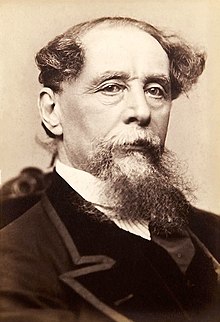
Charles Dickens
Charles John Huffam Dickens (/ˈtʃɑrlz ˈdɪkɪnz/; 7 February 1812 – 9 June 1870) was an English writer and social critic. He created some of the world's best-known fictional characters and is regarded as the greatest novelist of the Victorian era.[1] His works enjoyed unprecedented popularity during his lifetime, and by the twentieth century critics and scholars had recognised him as a literary genius. His novels and short stories enjoy lasting popularity.[2][3]
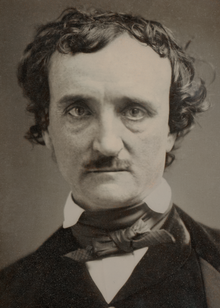
Edgar Allan Poe daguerreotype crop.png
Edgar Allan Poe (/poʊ/; born Edgar Poe; January 19, 1809 – October 7, 1849) was an American author, poet, editor, and literary critic, considered part of the American Romantic Movement. Best known for his tales of mystery and the macabre, Poe was one of the earliest American practitioners of the short story, and is generally considered the inventor of the detective fiction genre. He is further credited with contributing to the emerging genre of science fiction.[1] He was the first well-known American writer to try to earn a living through writing alone, resulting in a financially difficult life and career.[2]
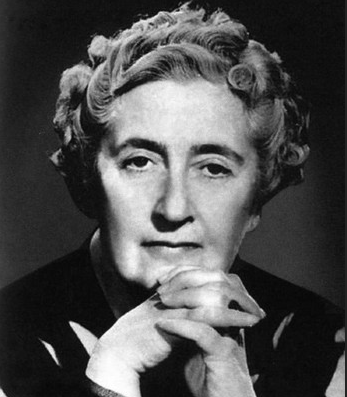
Agatha Christie.png
Dame Agatha Mary Clarissa Christie, Lady Mallowan, DBE (née Miller; 15 September 1890 – 12 January 1976) was an English crime novelist, short story writer, and playwright. She also wrote six romances under the name Mary Westmacott, but she is best known for the 66 detective novels and 14 short story collections she wrote under her own name, most of which revolve around the investigations of such characters as Hercule Poirot, Jane Marple, Parker Pyne, Harley Quin/Mr Satterthwaite, and Tommy and Tuppence Beresford. She wrote the world's longest-running play, The Mousetrap.[1] In 1971, she was made a Dame by Elizabeth II at Buckingham Palace for her contribution to literature.[2]
Detective fiction is a subgenre of crime fiction and mystery fiction in which an investigator or a detective—either professional or amateur—investigates a crime, often murder. The difference between investigator and detective:  Detectives are investigators with a higher rank. For a normal police officer to become a detective, he or she has to go through a lot of tests. Detectives are used to solve criminal matters, while investigators are employed to solve cases of missing person and adultery.


世界三大奇幻小說家

J. R. R. Tolkien

 C. S. Lewis

Ursula K. Le Guin

BBC Sherlock Trailer


2015年6月4日 星期四

Week 15 青少年小說

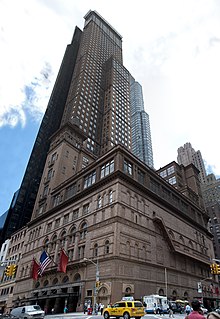
Carnegie Hall, NYC.jpg


Carnegie Hall (/ˈkɑrnɨɡi/,[3] also frequently /kɑrˈneɪɡi/[4] or /kɑrˈnɛɡi/) is a concert venue in Midtown Manhattan in New York City, United States, located at 881 Seventh Avenue, occupying the east stretch of Seventh Avenue between West 56th Street and West 57th Street, two blocks south of Central Park.


Paul's Case (1980) Poster
Lost in a world of fantasy, young working-class Paul dreams of escaping his dreary existence in turn-of-the-century Pittsburgh. As fate would have it Paul gets his chance by stealing some money and subsequently running off to glamorous New York City.

Willa Cather
Willa Cather ca. 1912 wearing necklace from Sarah Orne Jewett.jpg

Willa Sibert Cather (/ˈkæðər/;[1] December 7, 1873[2] – April 24, 1947[3]) was an American author who achieved recognition for her novels of frontier life on the Great Plains, including O Pioneers! (1913), The Song of the Lark (1915), and My Ántonia (1918). In 1923 she was awarded the Pulitzer Prize for One of Ours (1922), a novel set during World War I.


Cather grew up in Virginia and Nebraska, and graduated from the University of Nebraska–Lincoln. She lived and worked in Pittsburgh for ten years.[4] At the age of 33 she moved to New York City, her primary home for the rest of her life, though she also traveled widely and spent considerable time at her summer residence in New Brunswick, Canada.
Faust  is the protagonist of a classic German legend. He is a scholar who is highly successful yet dissatisfied with his life, which leads him to make a pact with the Devil, exchanging his soul for unlimited knowledge and worldly pleasures. The Faust legend has been the basis for many literary, artistic, cinematic, and musical works that have reinterpreted it through the ages. Faust and the adjective Faustian imply a situation in which an ambitious person surrenders moral integrity in order to achieve power and success for a delimited term.


The Faust of early books—as well as the ballads, dramas, movies, and puppet-plays which grew out of them—is irrevocably damned because he prefers human to divine knowledge; "he laid the Holy Scriptures behind the door and under the bench, refused to be called doctor of Theology, but preferred to be styled doctor of Medicine".[1] Plays and comic puppet theatre loosely based on this legend were popular throughout Germany in the 16th century, often reducing Faust and Mephistopheles to figures of vulgar fun. The story was popularised in England by Christopher Marlowe, who gave it a classic treatment in his play, The Tragical History of Doctor Faustus (1604). In Goethe's reworking of the story two hundred years later, Faust becomes a dissatisfied intellectual who yearns for "more than earthly meat and drink" in his life.