The Wonderful Wizard of Oz
The story chronicles the adventures of a young girl named
Dorothy Gale in the
Land of Oz, after being swept away from her
Kansas farm home in a cyclone.
[nb 1] The novel is one of the best-known stories in American popular culture and has been widely translated. Its initial success, and the success of the 1902 Broadway musical which Baum adapted from his original story, led to Baum's writing thirteen additional
Oz books. The original book has been in the
public domain in the US since 1956.
Baum dedicated the book "to my good friend & comrade, My Wife",
Maud Gage Baum. In January 1901,
George M. Hill Company, the publisher, completed printing the first edition, which totaled 10,000 copies.""
 Shirley Temple Black (née Temple; April 23, 1928 – February 10, 2014) was an American film and television actress, singer, dancer and public servant, most famous as Hollywood's number one box-office star from 1935 through 1938. As an adult, she entered politics and became a diplomat, serving as United States Ambassador to Ghana and later to Czechoslovakia, and as Chief of Protocol of the United States.
Bildungsroman
In literary criticism, a Bildungsroman (German pronunciation: [ˈbɪldʊŋs.ʁoˌmaːn]; German: "novel of formation/education/culture"),[a] novel of formation, novel of education,[2] or coming-of-age story (though it may also be known as a subset of the coming-of-age story) is a literary genre that focuses on the psychological and moral growth of the protagonist from youth to adulthood (coming of age), and in which, therefore, character change is extremely important.
O Come All Ye Faithful
O Come All Ye Faithful
Joyful and triumphant,
O come ye, O come ye to Bethlehem.
Come and behold Him,
Born the King of Angels;
O come, let us adore Him,
O come, let us adore Him,
O come, let us adore Him,
Christ the Lord.
O Sing, choirs of angels,
Sing in exultation,
Sing all that hear in heaven God's holy word.
Give to our Father glory in the Highest;
O come, let us adore Him,
O come, let us adore Him,
O come, let us adore Him,
Christ the Lord.
All Hail! Lord, we greet Thee,
Born this happy morning,
O Jesus! for evermore be Thy name adored.
Word of the Father, now in flesh appearing;
O come, let us adore Him,
O come, let us adore Him,
O come, let us adore Him,
Christ the Lord.
O Come All Ye Faithful – Christmas Carol Music and lyrics
L. Frank Baum
 Lyman Frank Baum (May 15, 1856 – May 6, 1919), better known by his pen name L. Frank Baum, was an American author chiefly known for his children's books, particularly The Wonderful Wizard of Oz. He wrote thirteen novel sequels, nine other fantasy novels, and a host of other works (55 novels in total, plus four "lost" novels, 83 short stories, over 200 poems, an unknown number of scripts,[1] and many miscellaneous writings), and made numerous attempts to bring his works to the stage and screen. His works anticipated such century-later commonplaces as television, augmented reality, laptop computers (The Master Key), wireless telephones (Tik-Tok of Oz), women in high risk, action-heavy occupations (Mary Louise in the Country), and the ubiquity of advertising on clothing (Aunt Jane's Nieces at Work).
2011 Oscars: Live Performance By PS22 Chorus - Somewhere Over The Rainbow
Lyman Frank Baum (May 15, 1856 – May 6, 1919), better known by his pen name L. Frank Baum, was an American author chiefly known for his children's books, particularly The Wonderful Wizard of Oz. He wrote thirteen novel sequels, nine other fantasy novels, and a host of other works (55 novels in total, plus four "lost" novels, 83 short stories, over 200 poems, an unknown number of scripts,[1] and many miscellaneous writings), and made numerous attempts to bring his works to the stage and screen. His works anticipated such century-later commonplaces as television, augmented reality, laptop computers (The Master Key), wireless telephones (Tik-Tok of Oz), women in high risk, action-heavy occupations (Mary Louise in the Country), and the ubiquity of advertising on clothing (Aunt Jane's Nieces at Work).
2011 Oscars: Live Performance By PS22 Chorus - Somewhere Over The Rainbow
 Samuel Langhorne Clemens (November 30, 1835 – April 21, 1910), better known by his pen name Mark Twain, was an American author and humorist. He wrote The Adventures of Tom Sawyer (1876) and its sequel, Adventures of Huckleberry Finn(1885), the latter often called "the Great American Novel".
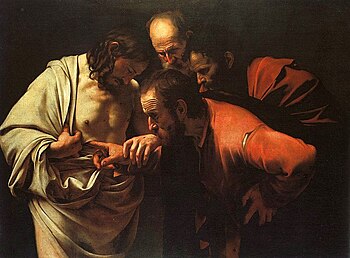 A doubting Thomas is a skeptic who refuses to believe without direct personal experience—a reference to the Apostle Thomas, who refused to believe that the resurrected Jesus had appeared to the ten other apostles, until he could see and feel the wounds received by Jesus on the cross.