2014年11月27日 星期四

Week 12 英文兒童文學

dis-
Examples Word Origin
1.
a Latin prefix meaning “apart,” “asunder,” “away,” “utterly,” or having a privative, negative, or reversing force (see de-, un-2.); used freely, especially with these latter senses, as an English formative:
disability; disaffirm; disbar; disbelief; discontent; dishearten; dislike; disown.

disable
[dis-ey-buh l]  Spell Syllables
Synonyms Examples Word Origin
verb (used with object), disabled, disabling.
1.
to make unable or unfit; weaken or destroy the capability of; incapacitate: The detective successfully disabled the bomb.
He was disabled by the accident.
2.
to make legally incapable; disqualify.

dissolve
[dih-zolv]  Spell Syllables
Synonyms Examples Word Origin
verb (used with object), dissolved, dissolving.
1.
to make a solution of, as by mixing with a liquid; pass into solution:
to dissolve salt in water.
2.
to melt; liquefy:
to dissolve sugar into syrup.
3.
to undo (a tie or bond); break up (a connection, union, etc.).
4.
to break up (an assembly or organization); dismiss; disperse.
5.
Government. to order the termination of (a parliament or other legislative body).
6.
to bring to an end; terminate; destroy:
to dissolve one's hopes.
7.
to separate into parts or elements; disintegrate.

discard
[v. dih-skahrd; n. dis-kahrd]  Spell Syllables
Examples Word Origin
verb (used with object)
1.
to cast aside or dispose of; get rid of:
to discard an old hat.
2.
Cards.
to throw out (a card or cards) from one's hand.
to play (a card, not a trump, of a different suit from that of the card led).
verb (used without object)
3.
Cards. to discard a card or cards.
noun
4.
the act of discarding.
5.
a person or thing that is cast out or rejected.
6.
Cards. a card or cards discarded.

---------------------------------------------------------------------------------------------
I feel shameful.
pro- in favor of, many, much
Aesop is reported as a prolific writer , for he wrote many works at his time.

Jonathan Swift by Charles Jervas detail.jpg
The V. Rev. Dr Jonathan Swift
Jonathan Swift (30 November 1667 – 19 October 1745) was an Anglo-Irish[1] satirist, essayist, political pamphleteer (first for the Whigs, then for the Tories), poet and cleric who became Dean of St Patrick's Cathedral, Dublin.[2]
He is remembered for works such as Gulliver's TravelsA Modest ProposalA Journal to StellaDrapier's LettersThe Battle of the BooksAn Argument Against Abolishing Christianity, and A Tale of a Tub. Swift is regarded by the Encyclopædia Britannica as the foremost prose satirist in the English language,[1] and is less well known for his poetry. Swift originally published all of his works under pseudonyms – such as Lemuel GulliverIsaac BickerstaffMB Drapier – or anonymously. He is also known for being a master of two styles of satire: the Horatian and Juvenalian styles.
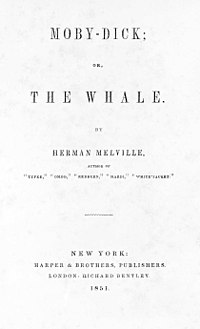
Moby-Dick FE title page.jpg

Moby-Dick; or, The Whale
Moby-Dick; or, The Whale (1851) is a novel by Herman Melville, in which Ishmael narrates the monomaniacal quest of Ahab, captain of the whaler Pequod, for revenge on the albino sperm whale Moby Dick, which on a previous voyage destroyed Ahab's ship and severed his leg at the knee. Although the novel was a commercial failure and out of print at the time of the author's death in 1891, its reputation grew immensely during the twentieth century. D. H. Lawrence called it "one of the strangest and most wonderful books in the world," and "the greatest book of the sea ever written."[1] Moby-Dick is considered a Great American Novel and an outstanding work of theRomantic period in America and the American Renaissance. "Call me Ishmael" is one of world literature's most famous opening sentences.

2014年11月20日 星期四

Week 11 英文兒童文學


To Kill a Mockingbird is a novel by Harper Lee published in 1960. It was immediately successful, winning the Pulitzer Prize, and has become a classic of modern American literature. The plot and characters are loosely based on the author's observations of her family and neighbors, as well as on an event that occurred near her hometown in 1936, when she was 10 years old.

To_Kill_a_MockingbirdThe novel is renowned for its warmth and humor, despite dealing with the serious issues of rape and racial inequality. The narrator's father, Atticus Finch, has served as a moral hero for many readers and as a model of integrity for lawyers. One critic explains the novel's impact by writing, "In the twentieth century, To Kill a Mockingbird is probably the most widely read book dealing with race in America, and its protagonist, Atticus Finch, the most enduring fictional image of racial heroism."

As a Southern Gothic novel and a Bildungsroman, the primary themes of To Kill a Mockingbird involve racial injustice and the destruction of innocence. Scholars have noted that Lee also addresses issues of class, courage, compassion, and gender roles in the American Deep South. The book is widely taught in schools in the United States with lessons that emphasize tolerance and decry prejudice. Despite its themes, To Kill a Mockingbird has been subject to campaigns for removal from public classrooms, often challenged for its use of racial epithets.


Bildungsroman

In literary criticism, a Bildungsroman novel of formation, novel of education, or coming-of-age story (though it may also be known as a subset of the coming-of-age story) is a literary genre that focuses on thepsychological and moral growth of the protagonist from youth to adulthood (coming of age), and in which, therefore, character change is extremely important.

2014年11月13日 星期四

Week 10 英文兒童文學

di-
prefix meaning two, although diverse could be speaking of more than two things.


diversity
dʌɪˈvəːsɪti,dɪ-/
noun
  the state of being diverse.
"there was considerable diversity in the style of the reports"
 a range of different things.
plural noun: diversities
"newspapers were obliged to allow a diversity of views to be printed"
synonyms:
varietymiscellanyassortmentmixturemixmelangerangearray,medleymultiplicity; More


para-1
1.
a prefix appearing in loanwords from Greek, most often attached toverbs and verbal derivatives, with the meanings “at or to one side of,beside, side by side” ( parabola; paragraph; parallel; paralysis),“beyond, past, by” ( paradox; paragogue); by extension from thesesenses, this prefix came to designate objects or activities auxiliary toor derivative of that denoted by the base word ( parody;paronomasia), and hence abnormal or defective ( paranoia), a sensenow common in modern scientific coinages ( parageusia; paralexia).As an English prefix, para- 1may have any of these senses; it isalso productive in the naming of occupational roles consideredancillary or subsidiary to roles requiring more training, or of a higherstatus, on such models as paramedical, and paraprofessional:paralegal; paralibrarian; parapolice.

paragraph

[par-uh-graf, -grahf]
Examples
Word Origin

noun
1.a distinct portion of written or printed matter dealing with a particularidea, usually beginning with an indentation on a new line.

2.a paragraph mark.

3.a note, item, or brief article, as in a newspaper.
verb (used with object)

4.to divide into paragraphs.

5.to write or publish paragraphs about, as in a newspaper.

6.to express in a paragraph.

------------------------------------------------------------------------------------------------------------
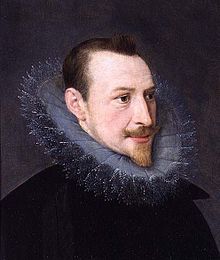
          Edmund Spenser
Edmund Spenser oil painting.JPG

Edmund Spenser (/ˈspɛnsə/; 1552/1553 – 13 January 1599) was an English poet best known for The Faerie Queene, an epic poem and fantastical allegory celebrating the Tudor dynasty and Elizabeth I. He is recognised as one of the premier craftsmen of Modern English verse in its infancy, and is often considered one of the greatest poets in the English language.

Fairy Queen is not a fantasy. It's allegorical work.

------------------------------------------------------------------------------------------------------------

Why Mosquitoes Buzz in People’s Ears

-Mosquito

-Iguana (frighten)                                                  King Lion
    farmer                                                      (call the council) 
-Python (scare)
             (ploting mysteries against me)
-rabbit (startle)
            (runs for her life)
-crow   (alarm)
-monkey (kill)

baby owl / mother owl


conflict

The mother owl makes the sun, the dawn can come.