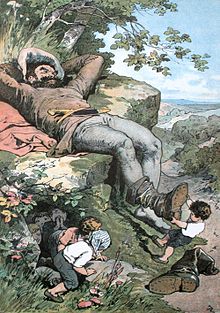
A fairy tale (pronounced /ˈfeəriˌteɪl/) is a type of short story that typically features European folkloric fantasy characters, such as dwarves, elves, fairies, giants, gnomes,goblins, mermaids, trolls, or witches, and usually magic or enchantments. Fairy tales may be distinguished from other folk narratives such as legends (which generally involve belief in the veracity of the events described)[1] and explicitly moral tales, including beast fables.
 |
 In less technical contexts, the term is also used to describe something blessed with unusual happiness, as in "fairy tale ending" (a happy ending)[2] or "fairy tale romance" (though not all fairy tales end happily). Colloquially, a "fairy tale" or "fairy story" can also mean any farfetch
Happy ending- fairy tale ending
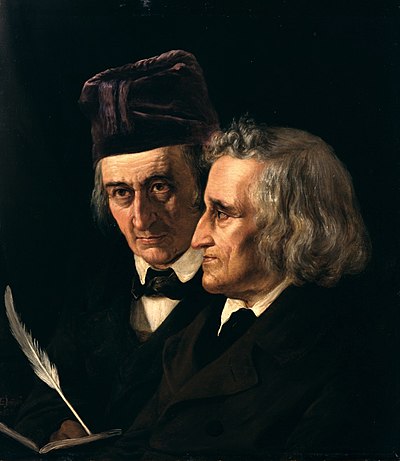
The Brothers Grimm (or Die Brüder Grimm), Jacob (1785–1863) and Wilhelm Grimm (1786–1859), were German academics, linguists, cultural researchers, lexicographers and authors who together specialized in collecting and publishing folklore during the 19th century. They were among the best-known storytellers of folk tales, and popularized stories such as "Cinderella" ("Aschenputtel"), "The Frog Prince" ("Der Froschkönig"), "Hansel and Gretel" ("Hänsel und Gretel"), "Rapunzel", "Rumpelstiltskin" ("Rumpelstilzchen"), and "Snow White" ("Schneewittchen"). Their first collection of folk tales, Children's and Household Tales (Kinder- und Hausmärchen), was published in 1812.
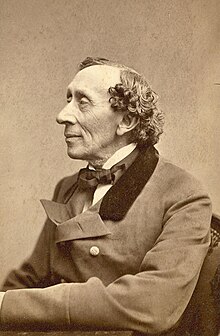
Hans Christian Anderson- The Little Mermaid, The Snow Queen , The Ugly Duckling
The Princess and the pea ,mirror stage → self-esteem
self- confidence
foul language
The catcher in the Rye
" If a body catch a body "
the red shoe - Anderson
↓
conflict → 小女孩窮
indifferent- careless
infamous- notorious
the red shoe - Anderson
↓
conflict → 小女孩窮
indifferent- careless
infamous- notorious

沒有留言:
張貼留言