dic·ta·tor
[dik-tey-ter, dik-tey-ter]
noun
1.
a person exercising absolute power, especially a ruler who has absolute, unrestricted control in agovernment without hereditary succession.
2.
(in ancient Rome) a person invested with supreme authority during a crisis, the regular magistracybeing subordinated to him until the crisis was met.
3.
a person who authoritatively prescribes conduct, usage, etc.: a dictator of fashion.
4.
a person who dictates, as to a secretary.
di·dac·tic
[dahy-dak-tik]
adjective
1.
intended for instruction; instructive: didactic poetry.
2.
inclined to teach or lecture others too much: a boring, didactic speaker.
3.
teaching or intending to teach a moral lesson.
4.
didactics, ( used with a singular verb ) the art or science of teaching.
Oxymoron: a figure of speech that combines two apparently contradictory elements, as in wise fool.
The wise fool, or the wisdom of the fool is a theme that seems to contradict itself in which the fool may have an attribute of wisdom.
For example,
1. "parting is such sweet sorrow'' → Romeo and Juliet.
2. Love and lost, dream and adventures, life and death
-------------------------------------------------------------------------------------------
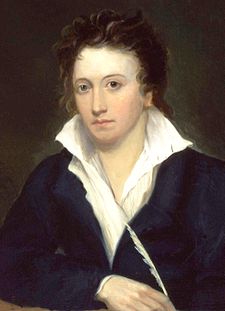
Percy Bysshe Shelley
Percy Bysshe Shelley (/ˈpɜrsi ˈbɪʃ ˈʃɛli/;[2] 4 August 1792 – 8 July 1822) was one of the major English Romantic poets and is regarded by critics as amongst the finest lyric poets in the English language.

Ode to the West Wind
----------------------------------------------------------------------------------------------
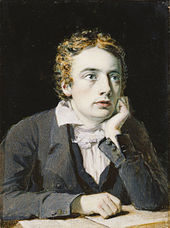
John Keats
"Ode on a Grecian Urn" is a poem written by the English Romantic poet John Keats
The final lines of the poem declare that "'beauty is truth, truth beauty,'
---------------------------------------------------------------------------------------------------
I think, therefore, I am. by Cogito ergo sum
"To be or not to be..." is the opening phrase of a soliloquy in the "Nunnery Scene"[1] of William Shakespeare's play Hamlet.
-------------------------------------------------------------------------------------------------------
| Archibald MacLeish | |
|---|---|
 |
-----------------------------------------------------------------------------------------------
Rhyme scheme
A rhyme scheme is the pattern of rhyme between lines of a poem or song. It is usually referred to by using letters to indicate which lines rhyme; lines designated with the same letter all rhyme with each other. Therefore, it is the pattern of end rhymes or lines.
|
A B A B
|

沒有留言:
張貼留言